Dreaming the future of software; Project Editor ECMAScript 2015; Reformed Smalltalker JavaScript historian dl.acm.org/doi/abs/10.114… @allenwb@mastodon.social
Sherwood Oregon USA
- Tweets 8,520
- Following 218
- Followers 6,373
- Likes 436
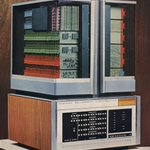
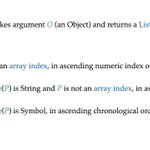
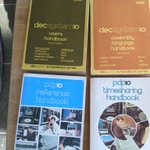
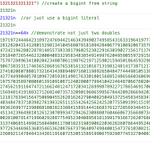
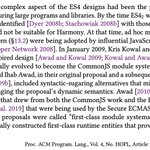
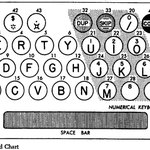

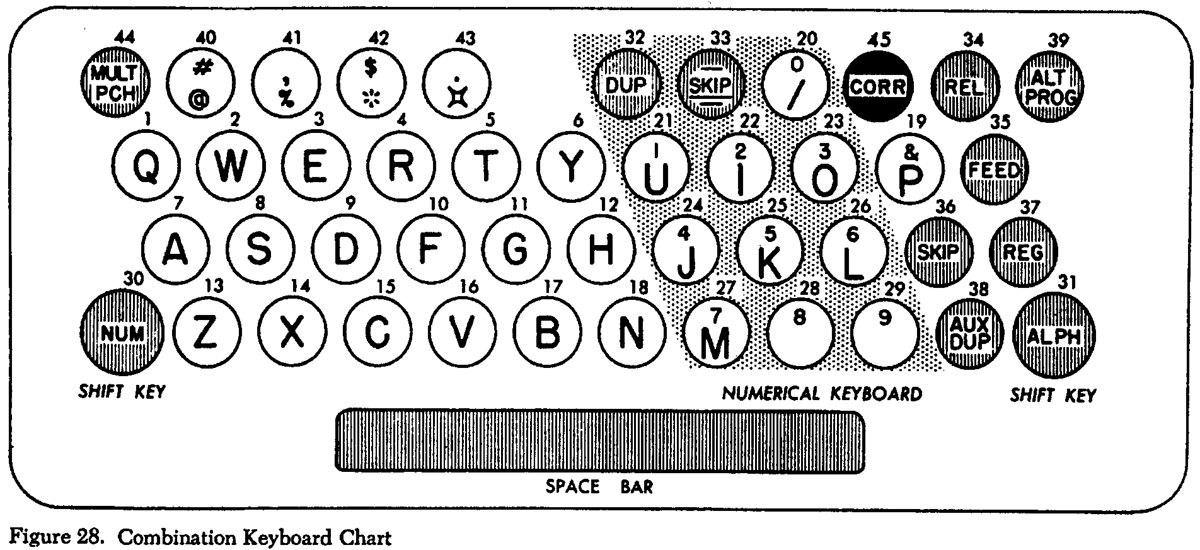
Early computing historical precedent—use of * for multiplication and ** for exponentation date back at least mid-1950s FORTRAN. That was the punch card era with a very limited set of available characters. No ^ which came along in 1970s.
1/
2
3
12
Likewise, I use so rarely. But it seems like such a useful capability. So why is it broadly ignored? Discoverability? X-app variability? Poor personalization?
What would it take for such a feature to be popularly useful?

I didn't realize that the Services menu was originally in NeXTSTEP: en.wikipedia.org/wiki/Servic…
I wonder what it looked like / how it worked back then (not that I even really use it now)
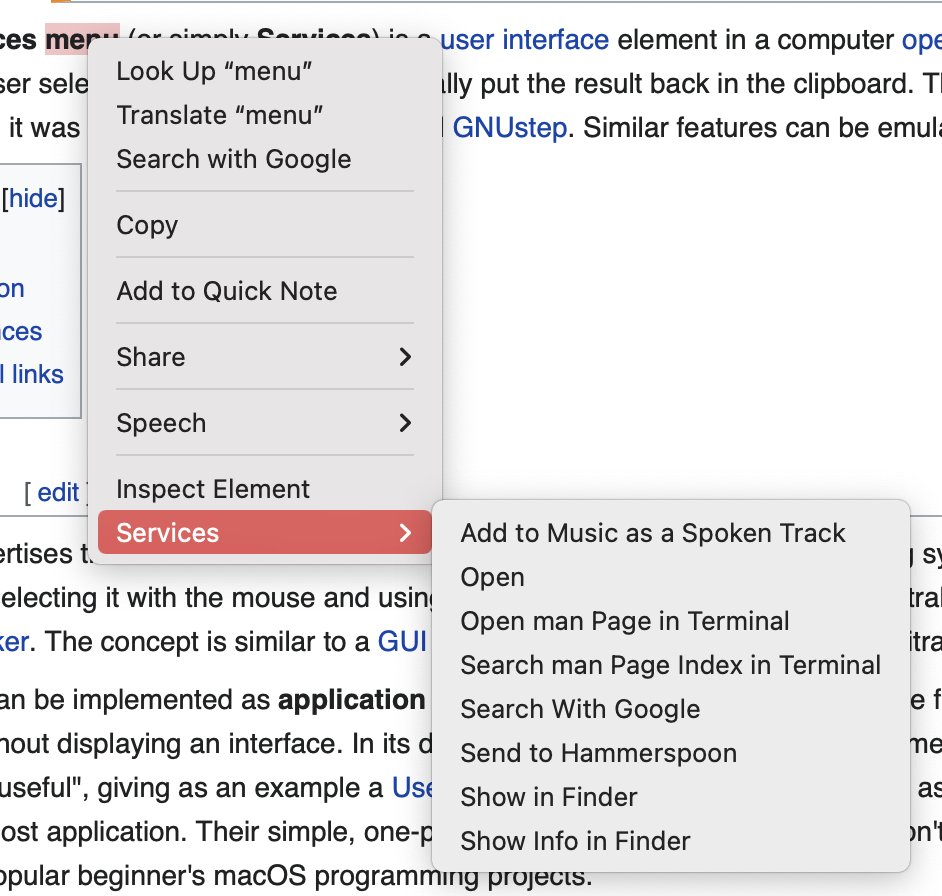
ALT screenshot of the Services submenu in the macOS right-click menu
5
2
13
Allen Wirfs-Brock retweeted

Here's the official University of Texas faculty memorial resolution for William Cook, who defined so much of the programming languages landscape we live in. (Written by Don Batory, with assists from @GhostofBendy and me.)
utexas.app.box.com/s/zvit5am…
9
51
155
These photos are much more typical of the era than the advertising shots we usually see.
One thing, regardless of gender, a “computer operations supervisor” wouldn’t be doing hardware troubleshooting using an oscilloscope. Clearly a joke photo.

Photos of women and giant-ass mainframe computers from the 1960s dangerousminds.net/comments/… via @DangerMindsBlog
Intriguing. Latest Treets mode doesn't do what you probably think it does,

The secret to understanding Latest Tweets mode is in the SimClusters paper released by Twitter a couple years ago.
This algorithm simplifies recommendation across the astronomical number of tweets and users by creating *artificial communities*
4
7
Allen Wirfs-Brock retweeted

Web3: Self-Sovereign Authority and Self-Certifying Protocols; Technometria - Issue #40 #SSI news.windley.com/archive/100…
2
7
11
I think for gentleperson scholarship to be a more attractive path we need both support groups and better ways of recognizing and archiving successful end products of good independent work.
10
I occasionally stumble upon really good independent work that is only captured as blog posts, personal websites, or obscure github projects. I suspect there is much more that I never see.
1
1
6
But the conferences and publications geared towards academic/corporate research filter for "inside the box" topics. It's hard (and unnecessarily constraining) for a "gentleperson scholar" to be recognized in such venues. it's a different club.
1
2
One of the attractions of working in this way is the ability to work "outside the box" on problems that would be institutionally difficult or impossible to pursue in corporate or academic environments.
1
1
What do they need to get started and continue on that path:
1) role models/mentoring
2) a ongoing support group of like minded people
3) collaborators for feedback, peer review, reality checks
4) credible venues for validating, communicating, and preserving their results
1
2
First who are we talking about? Highly talented and successful STEM people who are ready and have the means to get off the startup/corporate/academic treadmill but are still motivated to innovate within their chosen (or a related) field. They might be 30 YO, they might be 70+
1
1
Interesting thread, read the comments. I particularly agree with @scottjenson's observation about a lack of role models.
I self-identify with this path and know a number of others who are on it various degrees of success. So, a 🧵 of my thoughts on the subject.

This question's gauche, but: given the prevalence of $400k++ comp packages for ~30-year-olds in Big Tech, why aren't there lots more "gentle[wo]man scholars"? i.e. people quitting to do non-remunerative creative projects
I can think of some, but shouldn't there be thousands?
1
1
5
Very cool—a microcode level simulator (written in JavaScript) of a mid-1960s IBM 360/50 mainframe. The blog post is a great in depth introduction to the internal design ideas used in machines of that era and this 🧵is a very good summary.

I wrote a blog post that describes the IBM System/360 Model 50 mainframe and my simulator in more detail: righto.com/2022/01/ibm360mod…
3
18
Allen Wirfs-Brock retweeted

Do you save CACM going back to 1985? Please look for this add for me because I'd like to reproduce the circuit.

I’m pretty sure that Plumbin’ was featured in an ad for Tektronix Smalltalk in Communications of the ACM in autumn 1984 or 85. But wouldn’t you know it, just last week I recycled all my paper copies from that era. And ACM DL only has papers—no ads.
cacm.acm.org/magazines/1984
7
5
Tektronix smalltalk History and Document Archive
wirfs-brock.com/allen/things…
1
9
18
I’m pretty sure that Plumbin’ was featured in an ad for Tektronix Smalltalk in Communications of the ACM in autumn 1984 or 85. But wouldn’t you know it, just last week I recycled all my paper copies from that era. And ACM DL only has papers—no ads.
cacm.acm.org/magazines/1984

@KentBeck helped me finish Plumbin’ in 1985; Tudor in 2022.
1
5
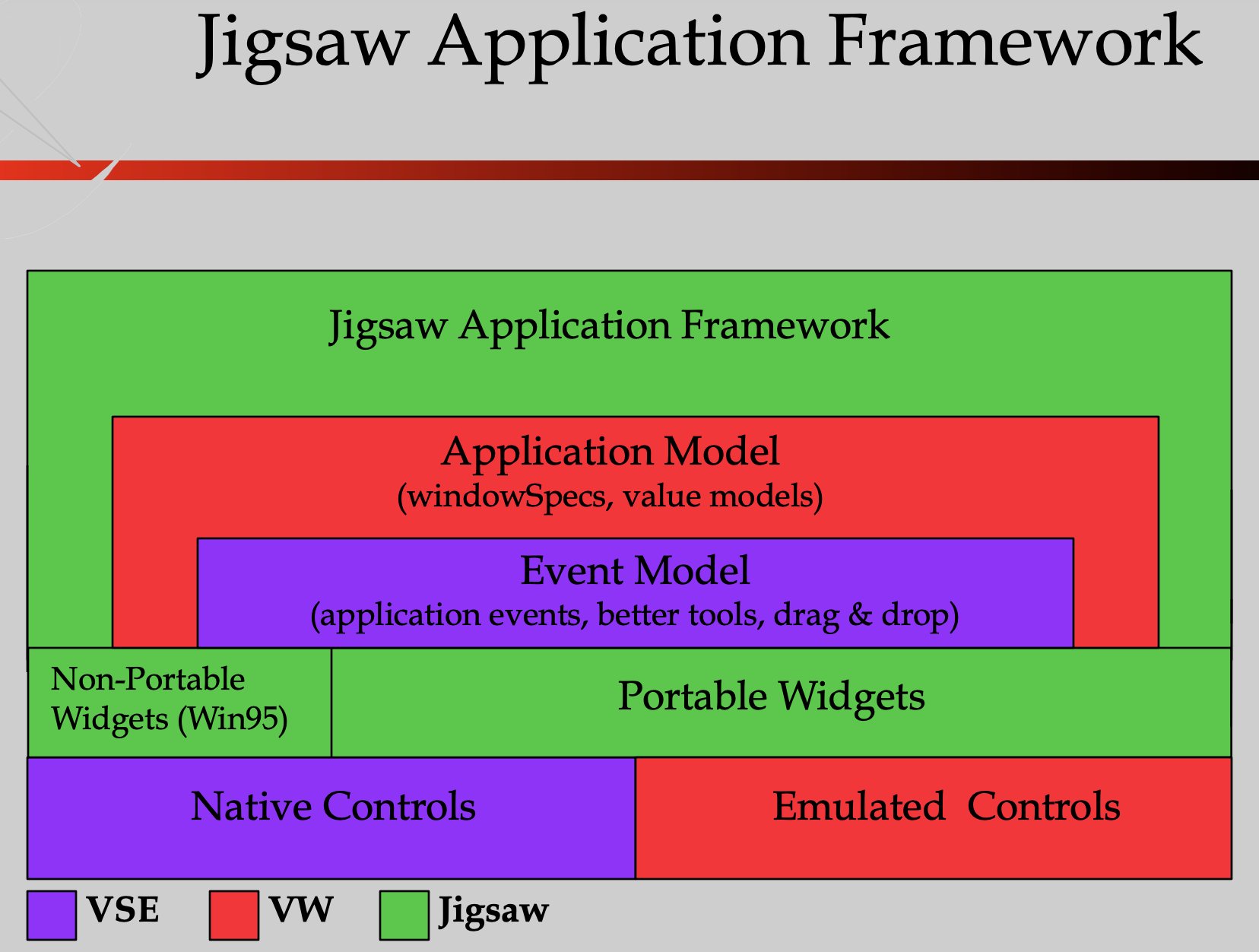
Details of the Jigsaw technical architecture in this pitch deck presented to major ParcPlace & Digitalk enterprise Smalltalk customers in Nov 1996.
wirfs-brock.com/allen/files/…
2
1
3
By the time we made significant progress toward that goal the web and Java completely change the enterprise dev tool market and turned Smalltalk into a legacy enterprise development technology. ParcPlace-Digitalk integration became irrelevant.
wirfs-brock.com/allen/posts/…
1
8