
Dreaming the future of software; Project Editor ECMAScript 2015; Reformed Smalltalker JavaScript historian dl.acm.org/doi/abs/10.114… @allenwb@mastodon.social
Sherwood Oregon USA
- Tweets 8,520
- Following 218
- Followers 6,374
- Likes 436


Allen Wirfs-Brock retweeted

It's the one year anniversary of The Crossover Project! Spanning two years of research, I investigate how software engineering compares to other branches of engineering... based on 17 interviews with people who've professionally done both kinds.
hillelwayne.com/post/are-we-…
12
111
440
Allen Wirfs-Brock retweeted

So excited to share our workshop at #CHI2022: “Sketching Across the Senses: Exploring Sensory Translation as a Generative Practice for Designing Data Representations”!
Find out more + apply at our website, sensorysketching.com/
More details in the 🧵 1/
1
5
11
Something they usually don't bother to tell in you in undergrad compiler courses...always keep working executables of previous revisions of your bootstrapped compiler!

Debugging a self-hosting compiler is... really trippy sometimes
— write some bad code
— accidentally install it, thinking it was correct
— realize the compiler broke
— fix the bug
— try to re-compile it
— can't compile it because my compiler is broken! Ahh!
2
4
33
A great satellite volcano-porn collection

Hunga Tonga-Hunga Ha'apai volcano explosive activity continues. Volcanic Ash Advisory Center Wellington warned about a volcanic ash plume that rose up to estimated 52000 ft (15800 m) altitude or flight level 520 and is moving at 05 kts in N direction buff.ly/3tz5maT
1
In the olden days (1950s-60s) computers emitted significant RF noise that could be picked up on a nearby radio. Some computer operators (folks who tended them) learned to recognize the “melodies" produced by common workloads and could tell when things were going wrong.

assigning sounds or frequencies to different pieces of data on your computer so (if you listen closely) you can hear the texture of what your computer is crunching on at any given moment
1
2
8
The remarkable thing about the early OOPSLAs were their success as common gathering place for academic researchers, industry advanced tech innovators, commercial products, and end-users of object tech. Haven’t seen and really miss that sort of cross fertilization elsewhere.

I don't know about "best", but my first OOPSLA (92?) was hugely influential. My first big conference tutorial, and I first met this fun, but rather strange individual known to twitter as @TotherAlistair
I also remember the kind help I received from @rebeccawb and Ralph Johnson
2
9
Allen Wirfs-Brock retweeted

A summary of blog posts I wrote in 2021
wirfs-brock.com/blog/2021/12…
1
8
9
Allen Wirfs-Brock retweeted
I'm curious...what's your fav (or most hated) tech-related sound? Maybe a sonic logo (like Intel chimes or Netflix buh-dum) or an auditory icon (like Windows startup noise or Mac trashcan sound) or the sound of an interaction (like the old school iPod wheel click). What else?
22
9
14
Reminds me of enterprise database transformations in 70s-90s. Instead of locking data into individual applications/formats, databases allow common data access from many apps.

There should be a standard format for notes apps so that switching is something you could do as often as you like, so that you can always use the best tool for the job.
1
5
One of the great things about working on developing OO technology in the 80s/90s was the comradery and collaboration among ostensive competitors. Most of us understood that that we were collectively trying to "invent the future"

4
13
Allen Wirfs-Brock retweeted

RT if you were part of that tiny 1993 bar.
(via @markrendle)
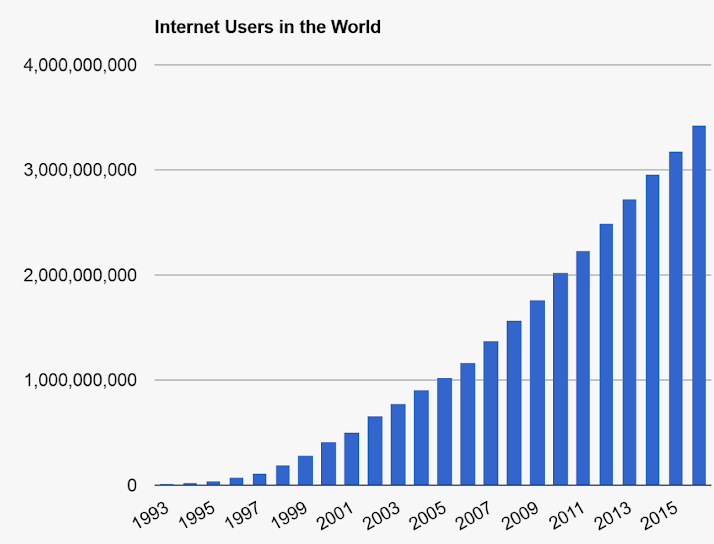
240
1,474
1,550
The simplicity of text is a myth. "Text file" is itself a binary format. Simplicity is its advantage. But to convey information (to a human or a program) via a text file requires additional layers of syntactic and semantic rules. Suddenly it's not so simple.

Not to beat this to death, but it's really a byte array that is the unit of xfer, and that's fine - that is exactly plumbing. Why humans should be forced to work on byte arrays directly is the question.
5
3
19
Years ago I told TC39 that if I could only have one of either 'private" or "protected" I'd take "protected".
But I acknowledge important use cases for strong encapsulation.
Symbol-keyed properties can work for "protected" but lack syntactic support.

I keep finding myself refactoring these private fields away after enthusiastically sprinkling them everywhere, because they don’t actually satisfy my use cases. Anyone else feel the same?
5
"Notes essentially landed between all the nodes of the Microsoft org chart. ...The lesson is that if you want to compete with a big company, then simply make a product that has elements controlled by multiple vice presidents." @stevesi
hardcoresoftware.learningbys…
1
5
12

Allen Wirfs-Brock retweeted

If he was going to pick part of the word "metaverse" he should have picked "averse"
1
2
8
An unfortunate fall out of the recent revelations about Google is the taint it brings to the excellent technical work of many current and former Google employees.

The original poster's speculations about the motivations for resistance within TC39 to JS weak references are incorrect. I’ll try to explain as simply as possible.
1/
10