Dreaming the future of software; Project Editor ECMAScript 2015; Reformed Smalltalker JavaScript historian dl.acm.org/doi/abs/10.114… @allenwb@mastodon.social
Sherwood Oregon USA
- Tweets 8,520
- Following 218
- Followers 6,374
- Likes 436
Allen Wirfs-Brock retweeted

Plain text is also a binary blob. You just have good tooling for that particular binary format.
1
4
32

Once you understand how to “fix” these problems, what you are left with is that a (Smalltalk) image is just a runtime environment where it is easy to suspend-save-resume the complete state of the environment. In particular closures and call stacks. Nice!

8
4/3
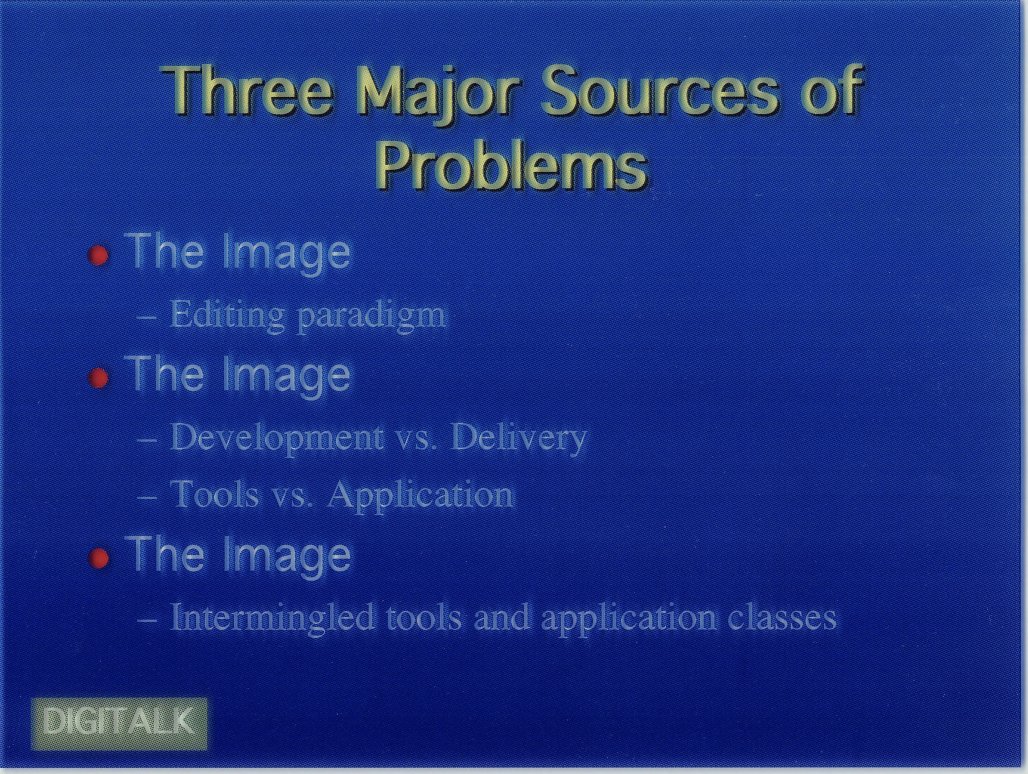
I also gave a talk in 2014 that is essentially a retrospective on that work: A Modular Journey To A World Spanning Virtual Image.
Video: youtube.com/watch?v=9ZKr2KRr…
Slides: wirfs-brock.com/allen/talks/…
3
5
This was essentially a mirrors-based Smalltalk IDE (no "mirrors" terminology) with a "module" structure ("packages") layered over classic ST-80. Source code stored in RCS, etc. Browsers, etc worded with: live in image classes, textual classes, live classes in another image.
3/3
1
3
The first link above are the slides for the talk (sorry for some PPT forward compat issues)
The second link is to an accompanying paper that was supposed to be in the OOPSLA Companion but they didn’t publish one that year.
2/
1
2
We had largely cracked such problems for Smalltalk at Digitalk in the early-mid 1990s. Text is just another media for representing object models.
I described our solution in an invited talk at OOPSLA'96. wirfs-brock.com/allen/talks/…
wirfs-brock.com/allen/files/…
1/
2
2
15
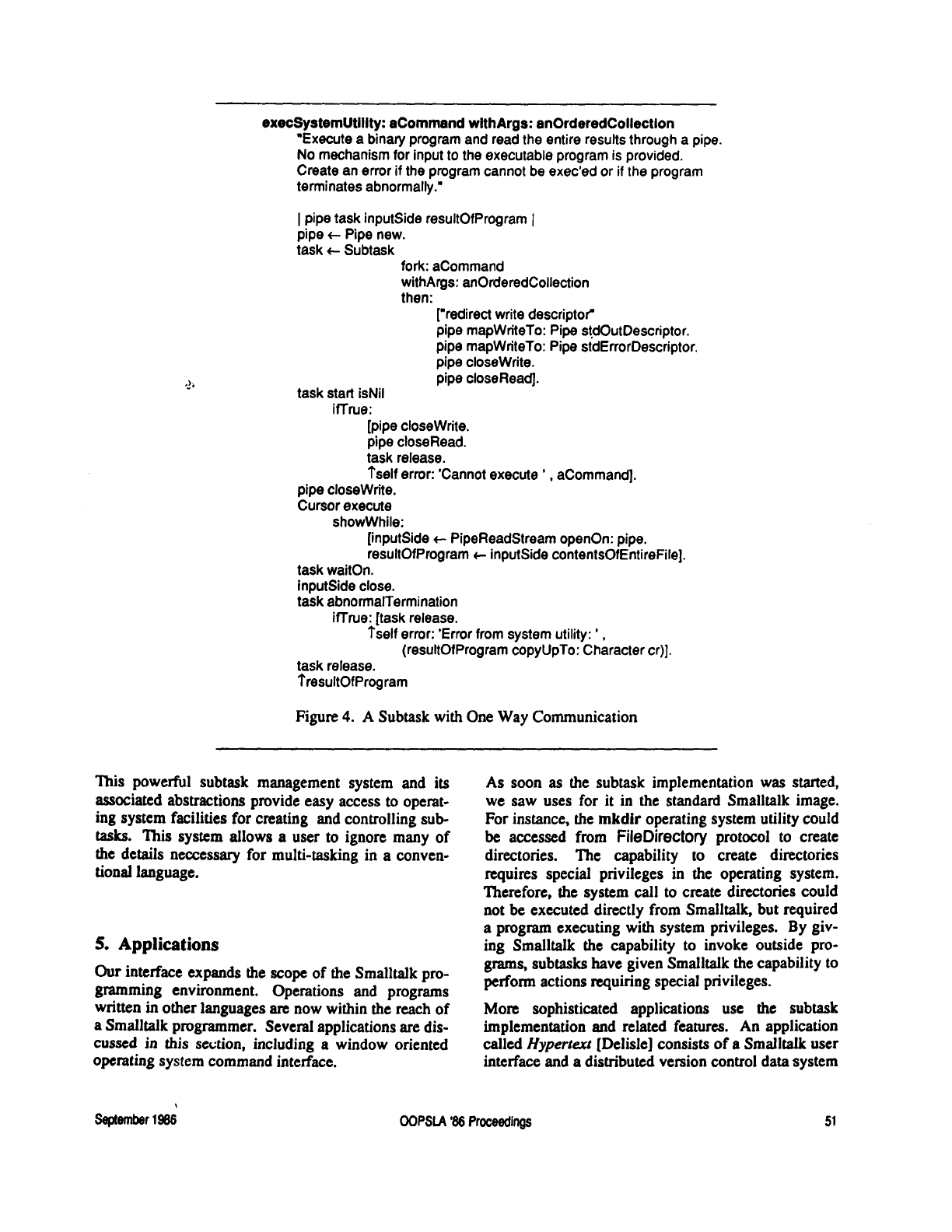
Juanita J. Ewing. 1986. An object-oriented operating system interface. (OOPSLA '86) DOI:doi.org/10.1145/28697.28703

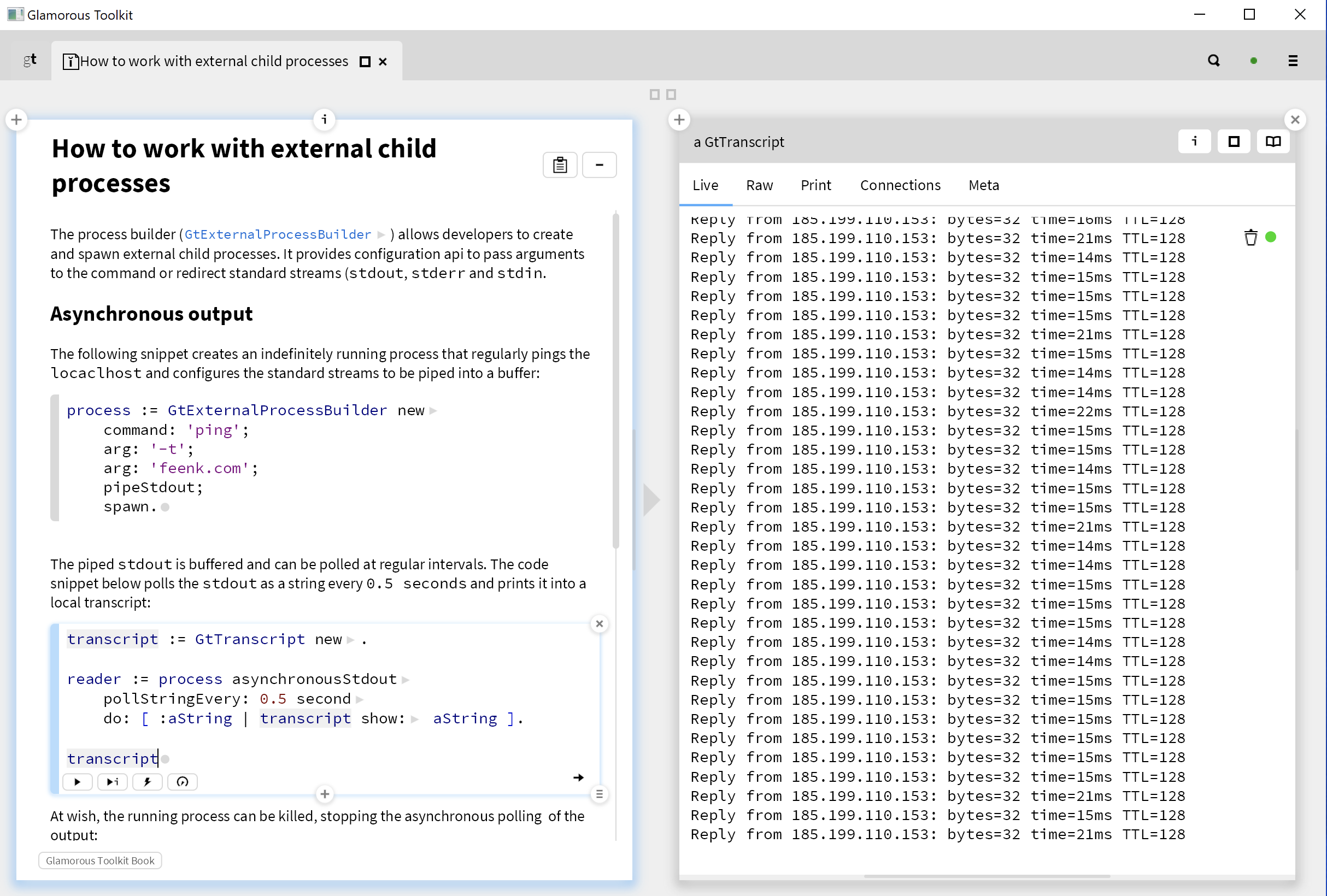
Working on cross platform support for dealing with external processes in #GToolkit.
Here is an example of viewing asynchronously the output of an external process that executes a ping … on Windows.
1
2
10
From the beginning, the proto Smalltalks had the concept of polymorphic messages. Inheritance was a later addition.
See dl.acm.org/doi/epdf/10.1145/…

While implementation inheritance is inessential to object polymorphism, it can always be viewed as a form of type inheritance. That may account for the confusion, which is common in typed languages.
2
15
Allen Wirfs-Brock retweeted

An interesting historic point is the idea that object-orientation originated in Simula; in reality, only inheritance originated there. True OO originates in Smalltalk.
1
5
15

Allen Wirfs-Brock retweeted

Take a look at the talk of Dan Ingalls on "The Evolution of Smalltalk from Smalltalk-72 through Squeak" from HOPL (2020):
pldi21.org/prerecorded_hopl.…
It's informative ... and just beautiful.
(The associated paper is here: dl.acm.org/doi/pdf/10.1145/3…)
1/
1
20
50
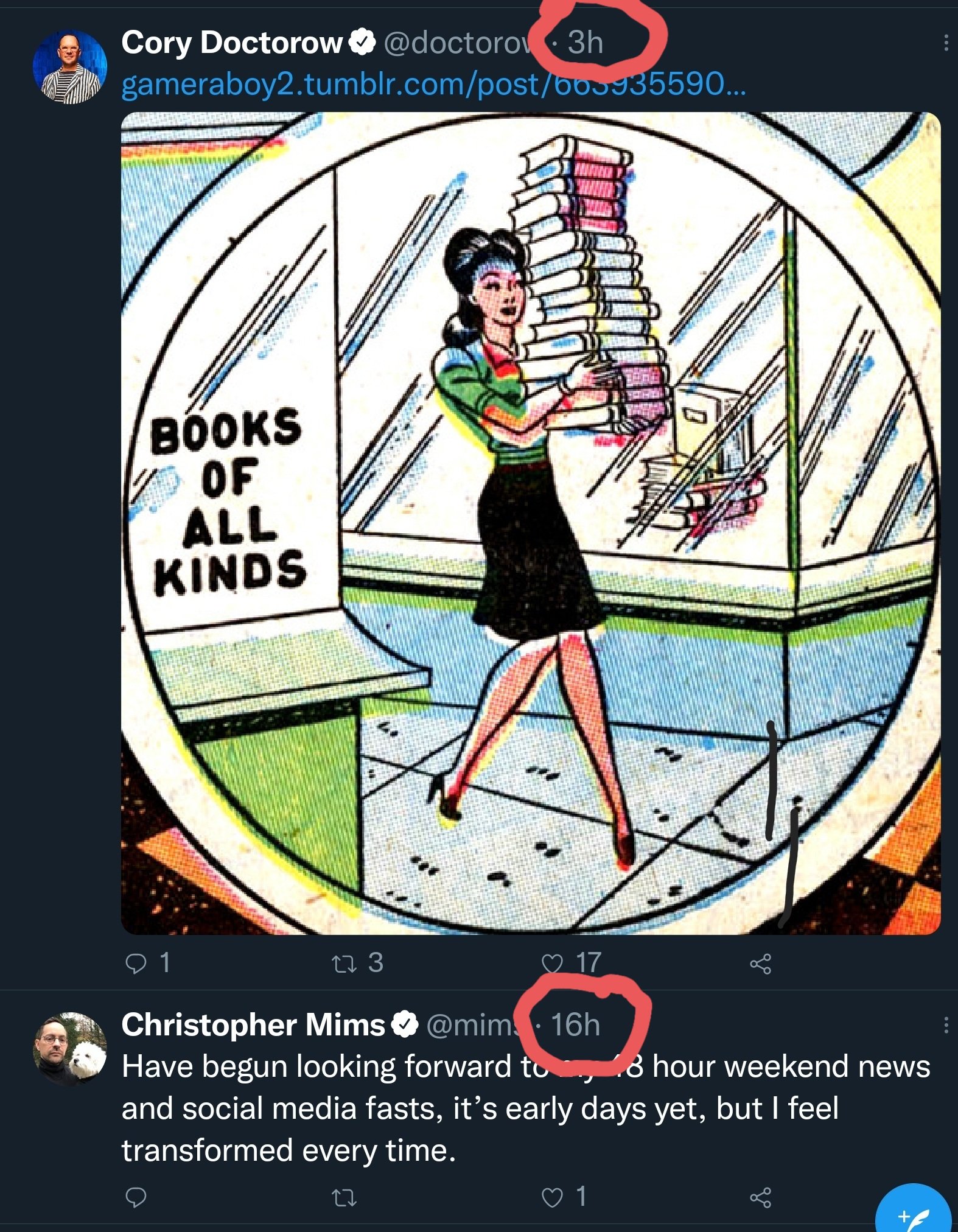
...am I being punished? Shortly after the above post my chronological feed (yes it really is set to that) using the @Twitter Android app has become unreliable on all my devices. Skips big spans. Still works as expected using web app. Anybody else experiencing this?
1
Probably the way it's been done for the last 40 years: Build new abstraction layers on top of legacy OSes proving utility of new ideas. Use successes/road blocks to drive modernization/replacement of legacy OS layers.
wirfs-brock.com/allen/posts/…

We need to reinvent our OSes.
Not clear how we can get there with current institutions unfortunately.
1
6
Venting: @Twitter I HATE the visual design of this "feature". It annoys me everyday. It's practically invisible while scrolling through my time line. Make it a big black bar, or a flashing stop sign, of anything that stands out, or are make it disablable...or just get rid if it!

2
6
Allen Wirfs-Brock retweeted

Boxing data into app silos not only actively hinders people's ability to do meaningful work, but has dire consequences for portability, experimentation and compatibility. This screen cap is miserable and it's utterly bizarre to see this progress.

It took a decade, but Apple just completely removed the need for understanding files and folders with the iPhone.
This kind of fundamental change is what great design looks like!
theverge.com/22684730/studen…
4
20
The concern should be that users are loosing the conceptual distinction between "files" containing information that they own and proprietary "apps" that work with that information. Apps want *exclusive* access to our "stuff" and too few users know enough to say Hell no!
2/2
1
2
8
I think Chin's article and her sources puts too much emphasis on understanding directory hierarchies as navigable places vs file access via search. An equivalent model simply views such hierarchies as searchable metadata attached to file entities.
1/
theverge.com/platform/amp/22…

i'm pretty ambivalent about files. they're useful because 1. they're actual objects with powerful-ish operations you can learn to do to them (unlike app stuff) and 2. 'social' reasons; lots of tools (esp programming tools, as in article) expect you to understand files and paths
1
Tudor is likely correct. But before spending time exploring a mountain wilderness I like to study a map to get the lay of the land. Similarity, before exploring the ground reality of running software I prefer to establish context by reading system architecture/design documents

Piecing together a perspective about a system mostly by reading code and other textual artifacts is the single largest expense and the largest bottleneck in software development today.
1
3
4
Allen Wirfs-Brock retweeted

I have been challenged to EXPLAIN MYSELF. Why do I say "programmers aren't mathematicians"?
First, I want to reject that I did a "snide erasure of our experiences." I've written a LOT advocating math skills in programming, and I teach formal logic for a living. I love math.

We need to shatter the programming / mathematics binary
Many of us programmers approach our craft just like mathematics (including equational reasoning, proofs, and category theory)
Comments like these come across as a snide erasure of our experiences
3
15
65