Dreaming the future of software; Project Editor ECMAScript 2015; Reformed Smalltalker JavaScript historian dl.acm.org/doi/abs/10.114… @allenwb@mastodon.social
Sherwood Oregon USA
- Tweets 8,520
- Following 218
- Followers 6,374
- Likes 436

Liberating our stuff" from mobile app lock in.
"I want to walk before I run. By creating a better model for mobile, the plan is to create a clear user understanding of what is “mine” and how this is seen, stored, shared, and acted upon."
4
Allen Wirfs-Brock retweeted

Everybody wants to own the platform. Nobody wants to be on someone else’s platform. Result: small, anemic platforms (what I’ve called the CompuServe of Things). @pbusch42 at #eci2021 says the answer is the Economy of Things, a decentralized IoT metasystem. windley.com/archives/2021/07…
2
3
8
"...more than other networked software, tools for thought want to be owned. I don't want to store my second brain on someone else's computer... Maybe this is just a niche category, or maybe it could be the basis for a new open-ended ecosystem?"
1
1
9
The same thing can be said about the IoT world.
windley.com/archives/2021/07…
1
2
Sure feels like parts of the @TC39 community need to find some Harmony
1
Allen Wirfs-Brock retweeted
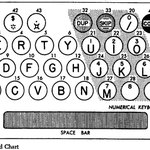
On teletypes the corresponding key was labelled “rubout” and was used for correcting paper tape mispunches. It punched all bit positions (Ascii 127) so by backing up and pushing rubout you could erase a character on the tape—assuming the reader (HW or SW) ignored ascii 127.
1
2
4
Allen Wirfs-Brock retweeted

If you want to make a long-term contribution to tech, make your users' data accessible through open file formats.
Software comes and goes, lots of planned obsolescence, but users' files tend to stick around.
2
16
73
Allen Wirfs-Brock retweeted

it strikes a chord because it reframes the problem of 'how to make long-lasting software' around people and culture, rather than coming up with the perfect technology platform

if i wanted to write software to last as far into the future as possible, i would probably write it as an NES or Game Boy ROM
2
7
60
Allen Wirfs-Brock retweeted

I agree with this. It's the environment, or "the habitat", in which the work is done that is massively lacking.
Few things in that env will be collab multi-person edit simultaneously.
Importantly, in a real room, I can _see what others are working on._ Ambient context.
1
1
2
Allen Wirfs-Brock retweeted
Collaborative multi-person editing is actually a pretty rare use case. I wish that much of the technical energy that is directed towards it was instead directed towards creating personal multi-device integration—a Personal Digital Habitat
wirfs-brock.com/allen/posts/…

I just don’t find 17 cursors mutating different parts of the same document simultaneously to be all that more effective than one person having control at a time (or every person having their own sub document), and it’s not like it solves 2 people making actual conflicting edits.
3
5
22
Yes, a file isn't "my stuff" unless it can be managed and meaningfully processed by a software agent of my choosing. Platforms should support this use case as the norm. For users, open formats > open source.

A text file, absolutely! An encrypted proprietary format, not so much. Your data isn’t really your data if it’s given to you in a closed format.
2
3
16
Allen Wirfs-Brock retweeted
This is scary...if people are growing up with mental models where "documents" are subordinate to "apps" then the app itself becomes a walled garden. No user concepts/expectations of interchange/interoperability/competitive implementations of standard doc formats?

I suspect there are some conceptions that students hold, based on current computer usage, that are impeding students from developing the file/directory mental model...
...and I am sufficiently old that I cannot even guess how this might work.
8
9
39
The fundamental user abstraction of "file" is "my stuff". It's the digital stuff that a user owns and controls its usage. "Apps" and data encircled by apps is not "my stuff". I have accumulated decades worth of digital stuff. Almost none of it are still functional "app".
5
14
"Too many people think “Mobile is the Future” but we are so far past that. *Mobile is the present*. We need to actually be thinking about the future that is coming and what we are going to need."
1
4
11
Croquet has an impressive pedigree and looks intriguing as a foundation technology for a Personal Digital Habitat experience. I need to dig deeper. wirfs-brock.com/allen/posts/…
croquet.io/faq/

1
7
18
Allen Wirfs-Brock retweeted

With the recent uploads on Vimeo, we now have a full year of presentations available on line. Thanks to all the presenters and to everyone who attended our meetings!
Check out the videos at vimeo.com/ukstug
6
20
Even shorter: Silos are an emergent property of the most common web app architecture; interoperability is an emergent property of file centric app architectures.
2
5
22
Allen Wirfs-Brock retweeted

By "large" internet I mean the original world-wide web as opposed to the "small" internet that denies the larger web's existence. The small claims to be more secure even though it is haunted by predatory giants with whom we do not want to associate.

It seems that there is a breakdown in the machinery we added for TLS. I'm tempted to rip all of that out and return to serving the "large" internet.
6
16