

Better UX, Better DX ➊ One is a cross-platform React framework built for sync engines · “one.js" in the streets
- Tweets 259
- Following 90
- Followers 2,609
- Likes 552














This will definitely be alpha, during which we'll be focusing on many needs to be fully production ready:
- A single schema for both ORM + Zero
- More robust migrations, permissions and auth
- Query composition
- SSR
5
536
Zero alpha is... here!
Keep eyes peeled for a One starter template available later today with:
- Web, React Native, and Tauri desktop
- Better Auth integration
- Complete local dev UX with docker compose

The most annoying problem for Zero's launch was what bug tracker to use.
GitHub is way too slow, and Linear doesn't have public bugs or permissions – both required for OSS projects.
This was driving me nuts, until I realized the only possible solution… ⏩
(link in reply)

2
2
35
2,282
One retweeted

If you want good UX, you can’t have the server in between any action.
If you want fast initial load, SEO, and to be webby, you must load from the server.
@one__js solves for both:
- One: server first, client rest
- RSC: server first & always
- SPA: client first & always
I just do not see it. Take a look at the profile. Mainly the browser is just waiting for the server to return data.
GitHub UI does a fairly good job of avoiding waterfalls. Presumably they do the one big request up front and then a bunch of little ones to get the main content out faster.
But it looks to me that the _server_ is the problem here.
Or to step back a bit, the problem is the architecture. It is fundamentally insane to go back to a central server on every user interaction. That is just not going to work ever to build a high performance UI.
1
3
37
4,594


Maybe we’ll get write in votes this year
survey.stateofreactnative.co…
1
4
656
One retweeted
will livestream today @ 3pm PT
building something new with @one__js
this will be fun as its basically not even a fully formed idea yet, so you'll get to see the whole process from researching, notes, prototypes, etc.

3
1
21
2,982
One retweeted

Very balanced take.
Also to trade off 1 - RSC also incurs a network latency penalty for interactions on the server handled parts. Interestingly not many people talk about this.

Here's how to better understand RSCs:
RSCs are two sets of tradeoff, a technical and an architectural. Yes "tradeoff", not "benefit". It might benefit your use case, but it might also be disadvantage.
1 - Pay for bundle size with payload size. By doing more work on the server, you can avoid having to send code to the client. But as a tradeoff you make each response payload bigger than it was. This might not matter if you had inefficient data patterns anyways, but atleast you had the capability to really optimize how much data is sent back and forth (see GraphQL). RSCs help you optimize for bundle size instead of payload size.
2 - Server-first vs client-first architecture. The way RSCs are intended to be used are with a server-first routing architecture (aka Next.js and Waku) rather than client first (aka Remix and Tanstack Start). You still have #1 with client first, but opting into server-first brings a whole set of tradeoffs of its own, like eliminating client-server waterfalls at the cost of granular refetching. You can get granular refetching with RSCs with a bit of work, and you can eliminate server waterfalls in a client-first architecture with a bit of work. But the architecture bakes that tradeoff fundamentally.
Any other advantage that people might tell you to sell RSCs like full-stack composition or client-server colocation are true, but they are not unique to RSCs. Server functions give you all of that, even in non-react frameworks, and don't force any tradeoffs like RSCs do. You might not need RSCs.
7
11
227
53,170

Why One?
Tree shaking is extremely important for web.
One tree shakes even CJS code, critical for avoiding bundle bloat.
One websites easily achieve 100 lighthouse scores due to that, and a whole bunch of other optimizations only we do.

TIL from @RobKnight__ that Metro (React Native bundler) doesn't support tree shaking
2
2
20
2,006
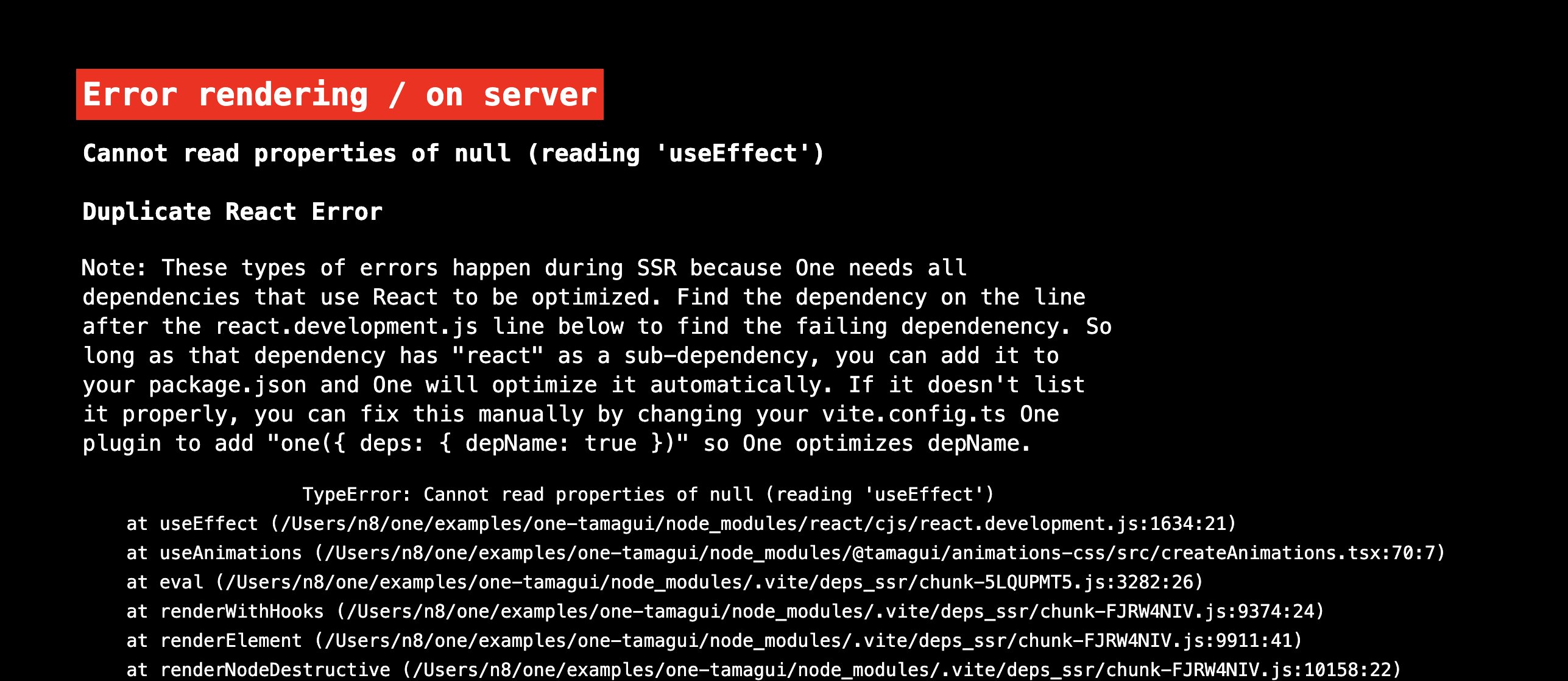
New One release:
Improved error messaging for common SSR issues with missing dependencies and duplicate React versions.
In the future we will add a button to "auto-fix" this.
1
11
847
New One release.
Compatibility with react-native-vector-icons fixed, as well as general fixes for broader module support.
15
1,092

One retweeted
Our team is open to some limited @tamagui_js and/or @one__js consulting over the next few months. We think it'll help us develop both more effectively.
If you want a really nice One app, this is the chance! DMs open.
2
3
30
4,799
A new era

The New Architecture is here!
React Native 0.76 enables the New Architecture by default:
reactnative.dev/blog/2024/10…
31
2,071
One retweeted

New React framework: One.
In this episode, I talk to One’s lead developer, Nate Wienert.
What makes One special?
- Do React and React native in the same project
- SPA, static, or server modes on a per-file basis
- Includes Tamagui, a web and mobile styling system
- Soon will include Zero for smart sync between client and server
Here's a short clip from our chat. Full video in next post.
4
12
145
19,104
One retweeted

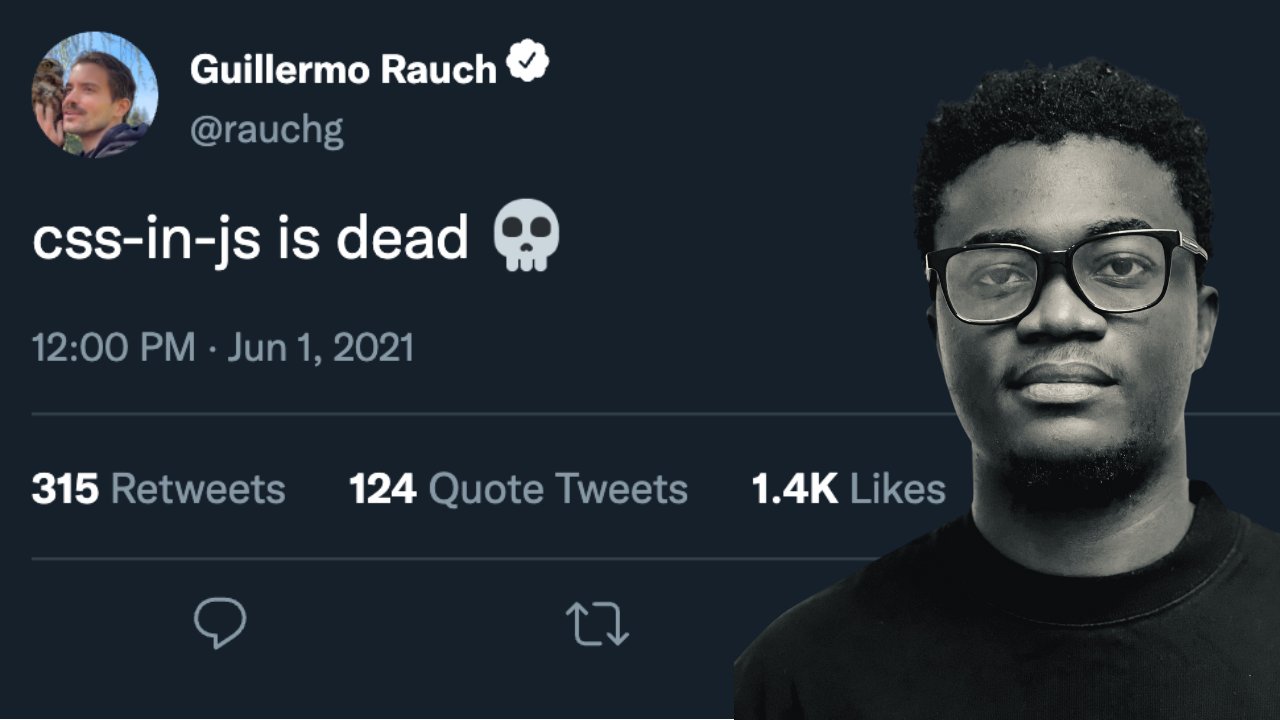
Just uploaded TKYT #64 with @natebirdman on why CSS-in-JS is not dead - the new generation of CSS-in-JS solutions like @tamagui_js, and building universal React apps with @one__js
Go watch it: youtu.be/PWuKuSTp8BI
Retweet appreciated 🙏🏾
1
6
20
5,583