Dreaming the future of software; Project Editor ECMAScript 2015; Reformed Smalltalker JavaScript historian dl.acm.org/doi/abs/10.114… @allenwb@mastodon.social
Sherwood Oregon USA
- Tweets 8,520
- Following 218
- Followers 6,374
- Likes 436

Allen Wirfs-Brock retweeted

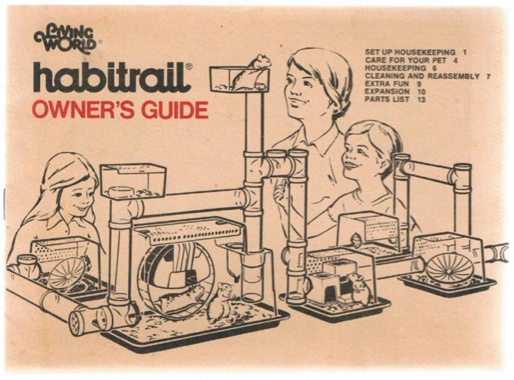
Blog Post: All I want is a Personal Digital Habitat
wirfs-brock.com/allen/posts/…
1
7
22
“Despite my personal attempts since 2004 to subclass Arrays and others, it’s not really possible to extend builtins in ES5 in a useful, or meaningful, way.” @WebReflection
This problem directly inspired the design of ES6 class features. I’m very proud of what we accomplished.

JS classes are *not* just sugar.
There are various details to consider, be aware of, or use, to write better, faster, and modern, code.
I hope this post clarifies at least the most obvious parts that demonstrate prototypal inheritance is not equivalent.
webreflection.medium.com/js-…
7
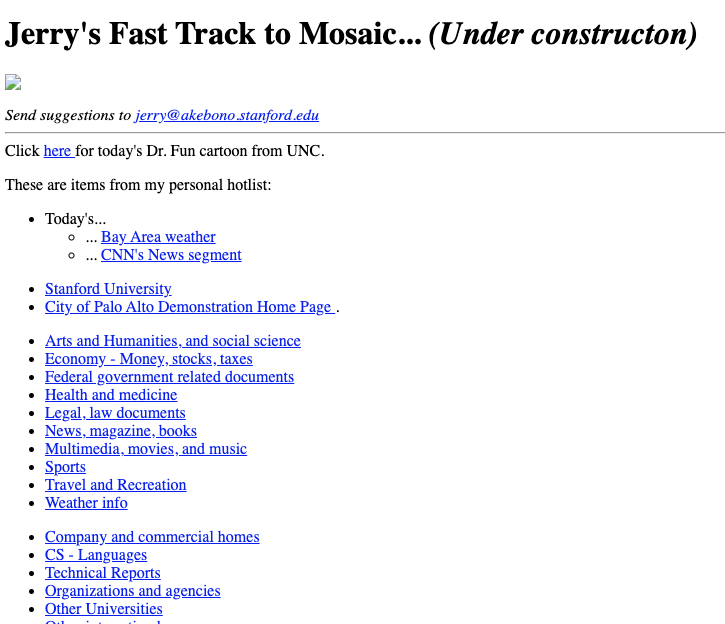
What was the web like in March 1994? Jerry Yang's Stanford precursor to Yahoo! presents a significant slice of it.

In March 1994, Jerry Yang's list of sites was on his homepage at akebono.stanford.edu/~jerry and manually-edited, archived here from David Filo's backup. web.archive.org/web/20020306…
1
4
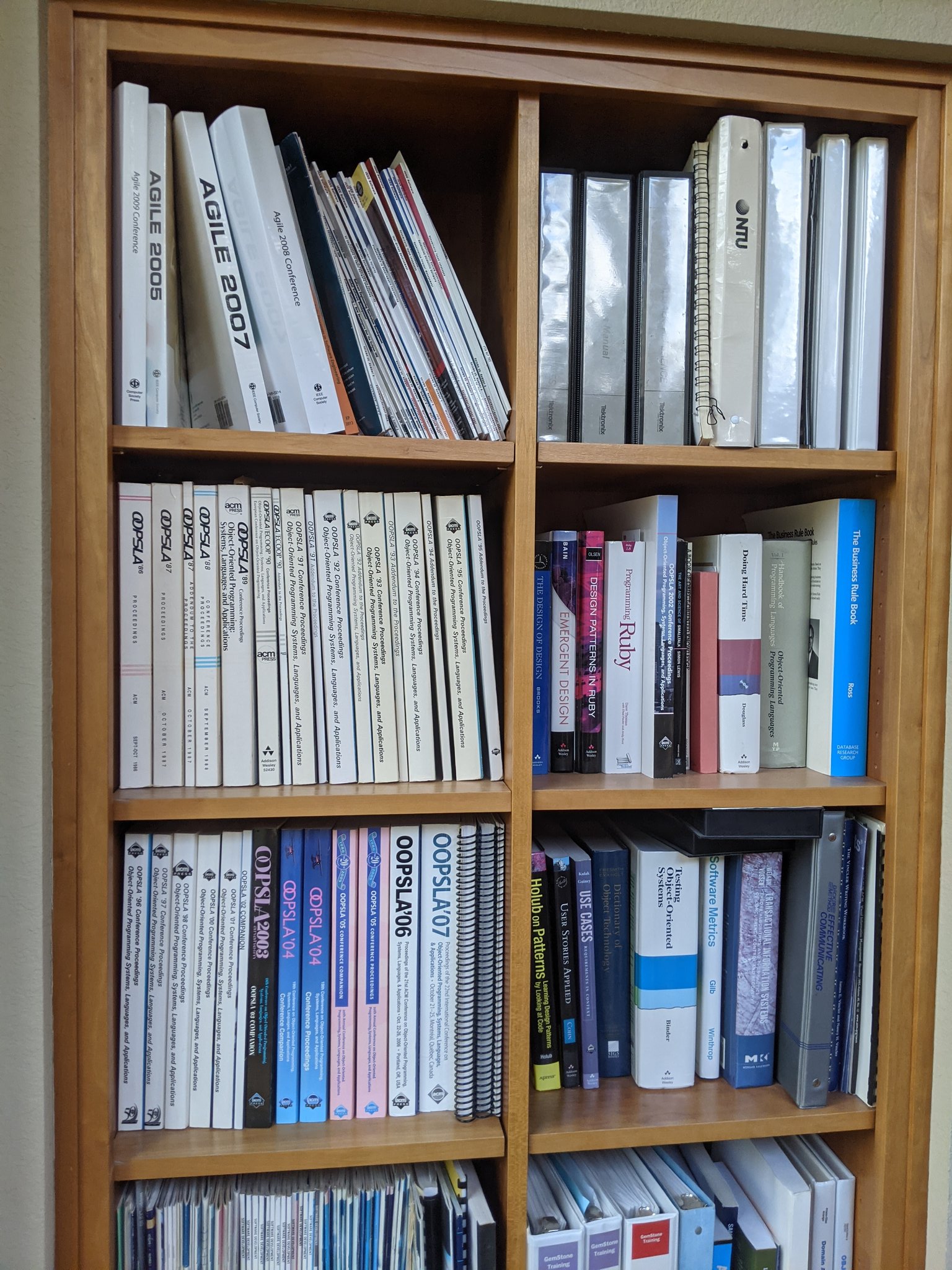
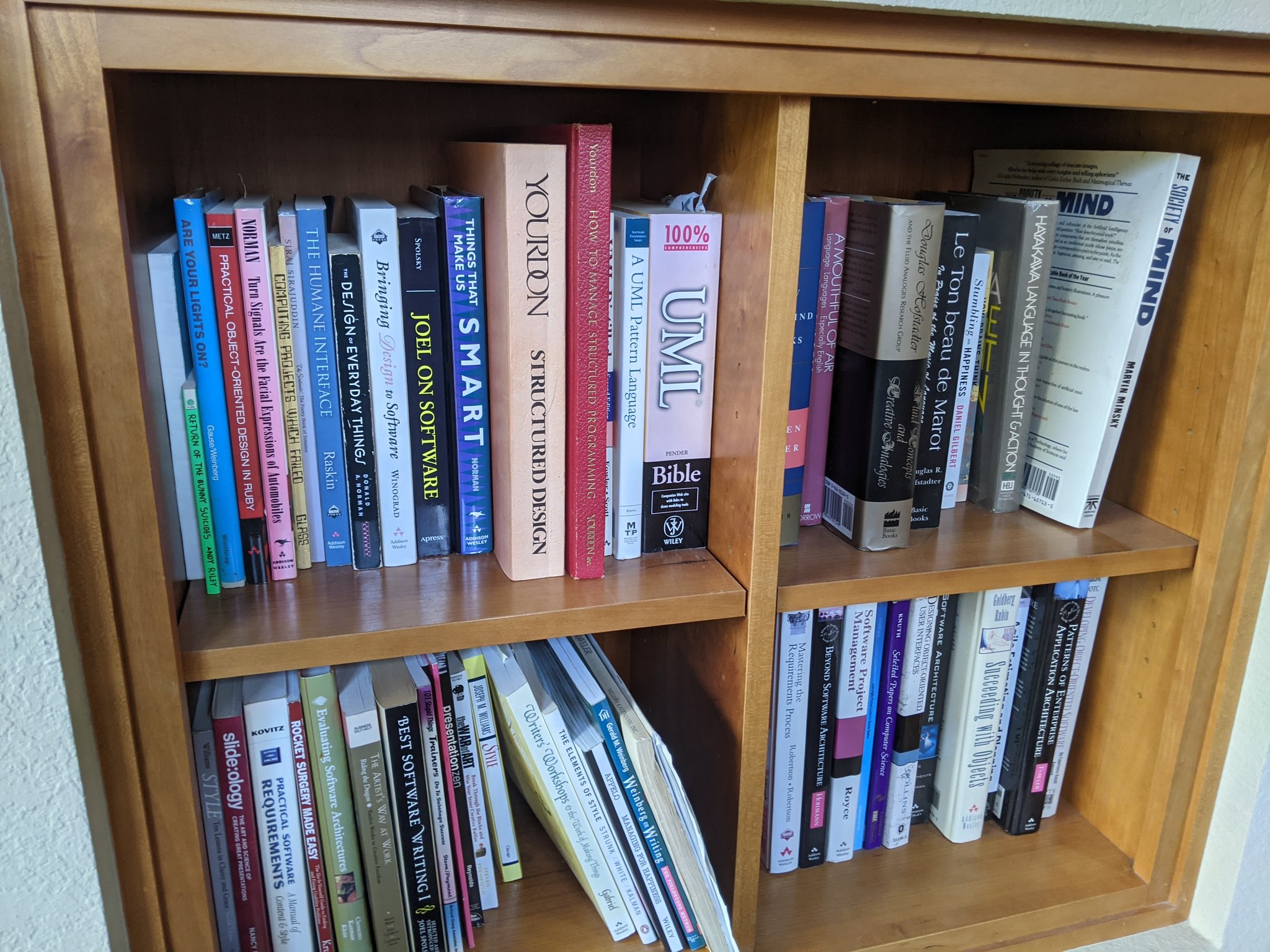
Bookcase sharing can be fun and revealing. Here's one of mine. Some pretty old things up there.
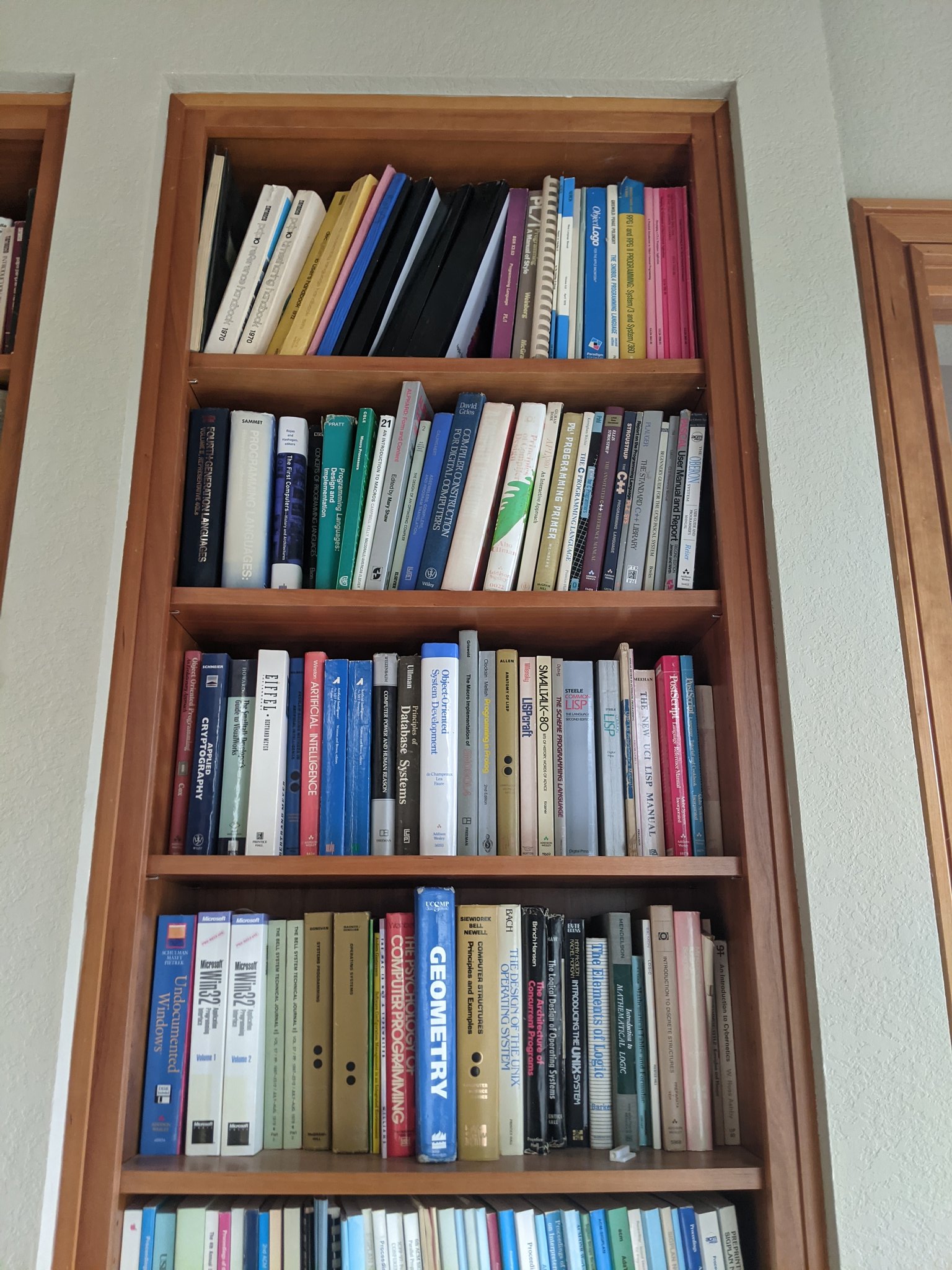

Booch, Object-Oriented Design with Applications. Among others. #shelfie
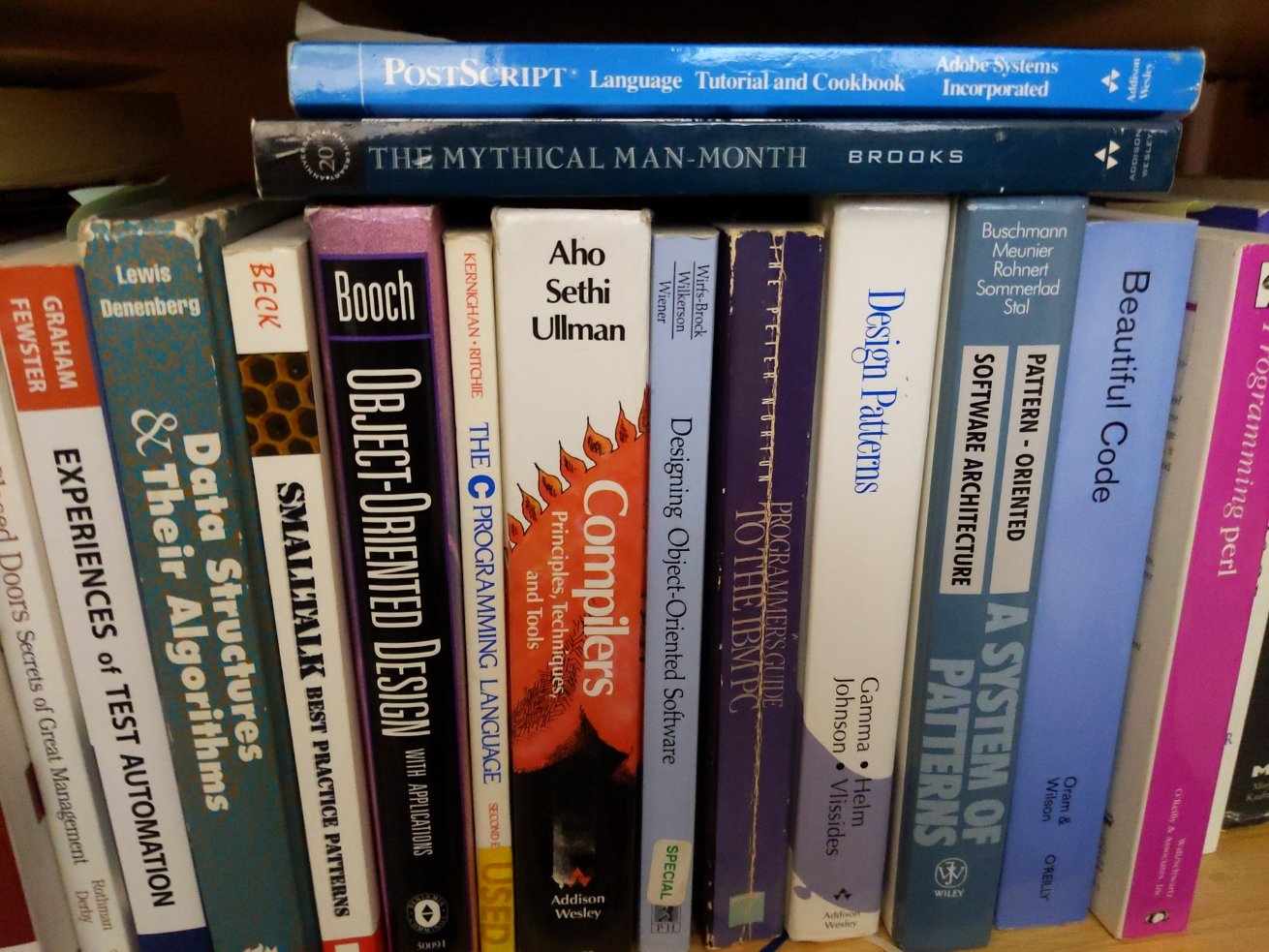
ALT Close-up of a shelf of computer books. Authors: Grady Booch, Aho Sethi and Ullman, Fred Brooks, Larry Wall and Randal Schwartz, Gamma Helm Johnson and Vlissides, Kent Beck, Peter Norton.
1
1
8
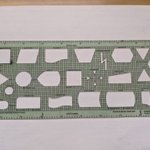
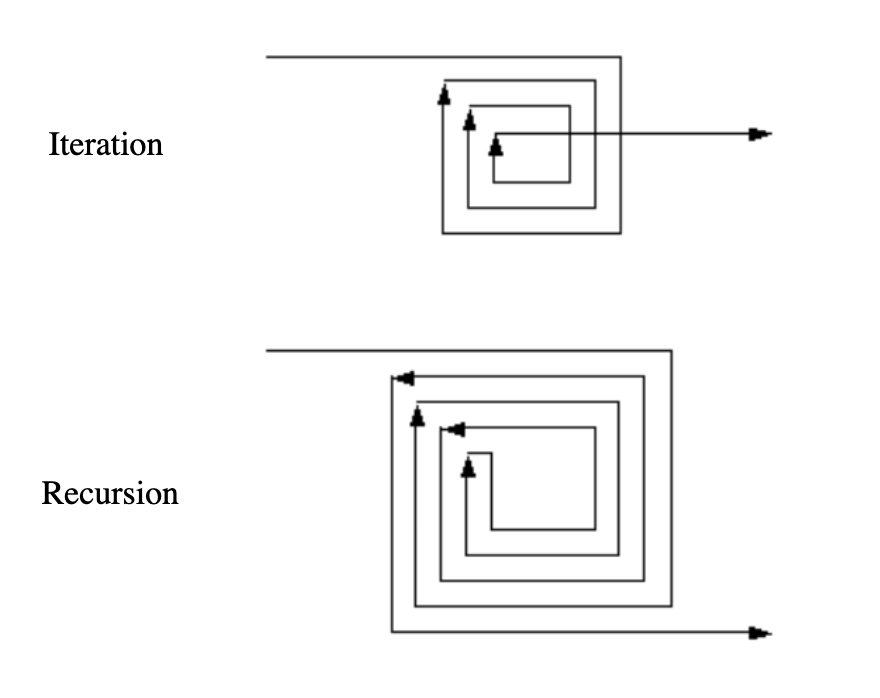
Kind of love this metaphorical sketch I stumbled upon by @nikb0yd
educery.dev/papers/software-…
9
23
Allen Wirfs-Brock retweeted

1/ In government, there is a flawed belief that software development is a skill that they cannot afford, but software governance is a generalist’s domain, and any required specialist skills can be quickly acquired.
4
98
319
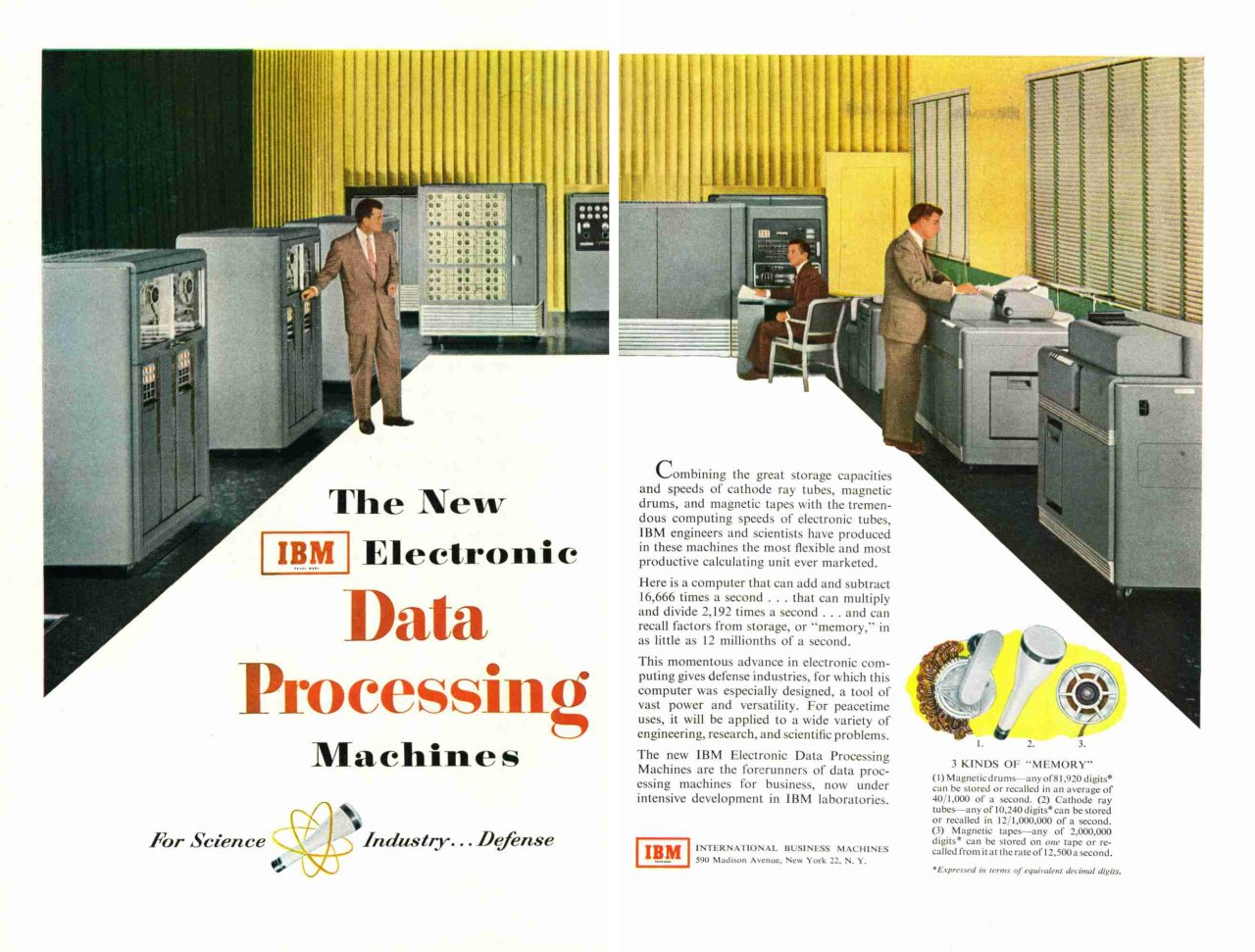
The 701 was IBMs first commercially produced computer. I love the ads memory description.
More info ibm.com/ibm/history/exhibits…

1
1
Allen Wirfs-Brock retweeted

Never buy anything from a company big enough to set its own standards.
1
2
Allen Wirfs-Brock retweeted
I know you are trying to be a good historian but I thing you are making the classic error of projecting the present on to the past.
I was a self taught programmer, first paying job 1970. CS degree 74-76. I going to focus on the the 70 with issues I see in your analysis 1/
2
1
13
“Instead of encoding information via language alone, the GUI uses a much richer multilayered approach to simultaneously encode information via language, symbolism, hierarchy, and context to produce an interactive interface.”
@thisisehsan

Just stumbled across:
whydoweinterface.com
by @thisisehsan.
It’s opinionated and it’s beautifully done.
1
1
6
The concept of "Personal Digital Habitat" in the quoted thread is my attempt to provide a long term vision as a counter to the pervasive incrementalism that dominates industrial and academic systems research. Envision the future you want—encourage invention that goes there.
1/

At low levels that would be occurring. But orchestrated in a manner that allows a user to conceptualize a single unified “habitat" of artifacts and applications accessible from all devices. User attention shifts among devices but stays in the same habitat. A “OS” created illusion
1
4
9
Allen Wirfs-Brock retweeted
Nice thread by @geoffreylitt, read it! He's one of a wave of thinkers/developers exploring next generation platforms and UX models. One issue is what does "local-first" mean when we (the users) have multiple "devices" that we constantly switch between.
1/

I'm super impressed by the approach @craftdocsapp is taking to data ownership.
At the same time, I think they're hitting the limits of modern data storage platforms, and hinting at precisely why we need a new kind of "collaborative filesystem".
Quick thread to explain:
1
5
26
Nice thread by @geoffreylitt, read it! He's one of a wave of thinkers/developers exploring next generation platforms and UX models. One issue is what does "local-first" mean when we (the users) have multiple "devices" that we constantly switch between.
1/
I'm super impressed by the approach @craftdocsapp is taking to data ownership.
At the same time, I think they're hitting the limits of modern data storage platforms, and hinting at precisely why we need a new kind of "collaborative filesystem".
Quick thread to explain:
1
5
26
What we need is a non-siloed "local-first" PDH operating system that provides the PDH common user experience and the services&APIs that enable the creation of PDH integrated apps.
5/
1
8