
Dreaming the future of software; Project Editor ECMAScript 2015; Reformed Smalltalker JavaScript historian dl.acm.org/doi/abs/10.114… @allenwb@mastodon.social
Sherwood Oregon USA
- Tweets 8,520
- Following 218
- Followers 6,373
- Likes 436






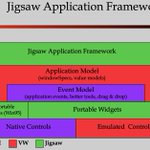

A good but tiny start on a nice idea. However, scaling it to be comprehensive seems daunting.

I'm excited to share The Whole Code Catalog: my reviews of two-dozen programming-ish tools to inspire the creators of tomorrow's programming languages and computational mediums futureofcoding.org/catalog/
1
2

And it will carry an early version of JavaScript into space.
codesmithdev.com/9bn-james-w…
3
Speaking of history& conferences. Progamming language connoisseurs: the 4th History of Programming Languages Conference (HOPL IV) will be in London next June.
HOPLs only happen every 12-15 years so attending will be an unique opportunity.
hopl4.sigplan.org/
1
2
3
BTW, I just came up with the term “Heirloom Software/Systems”. Really like it.
Has anybody else used heirloom in this context?
I’ve been looking for something better term than “legacy” especially for significant software that grappled with (and perhaps solved) “modern” problems.
9
6
19
This is a great idea. Although it doesn’t need to be a separate track. It would be great if most conferences simply included “history of relevant [to the topic of the conference] technologies and heirloom solutions.
2
2
12
I don’t think we want JavaScript to have dangling import references.

So you can dynamically import, but not dynamically delete in Javascript.
I think I just found my next spec to write
@TC39 expect something from me soon.
1
2
6
The brief of language standards committees usually only cover the core language, not language related tools.
Yet, the best developer experiences are with languages that are co-designed/co-evolved with their dev environment allowing lang/env trade-offs.
1/

JavaScript is a weird language, normal linear code editors choke on it (aka "callback hell"). The committee that designs the language changed JS to try to make it fit the editors most people use and now it has become a chaotic mess.
scripting.com/2019/08/19.htm…
1
2
6
Classic high productivity (and usually fun) programming experiences like Smalltalk, Visual Basic, @davewiner's Frontier, C#+Visual Studio, etc are all co-designed language+editor environments.
(Remember, the "i" in IDE stands for integrated.)
2/
2
4
Allen Wirfs-Brock retweeted
The primary motivation was ensuring that, in the presence of Proxy, host & implementation defined exotic objects, execution sandboxes could still depend upon integrity related constraints such as what it means for objects to be "frozen" or for a property to be non-configurable.
1
2
For many years, the common wisdom was that the only way to make 1995-2005 era JS faster was to add new syntax (e.g., nominal static class & machine types, etc.). Then engine implementors proved otherwise. Usually, engines figure out how to make important things faster.
1
1
17
👍 However, this problem isn't new to JS.
The worse code I ever saw was a many page (actually boxes of cards) COBOL program that had been manually transcribed into a single Smalltalk class.
They took the "Smalltalk is the successor to COBOL" marketing slogan literally

Just learn and use JS to write JS. What works in Java or C++ or Kotlin or Go or... whatever... leave those things to those languages.
If you really just want to write those languages, great. Do so! And then let tools transpile it to JS for you.
But stop writing not-JS-in-JS.
6
Allen Wirfs-Brock retweeted

My suggestion is, and always will be, drop the mindset that JS was designed poorly or non-intuitively.
Instead try to learn how JS works, embrace it, and go with its grain. So much more pleasant to write JS the way it works most naturally, than to keep trying to make it not-JS.
3
41
109
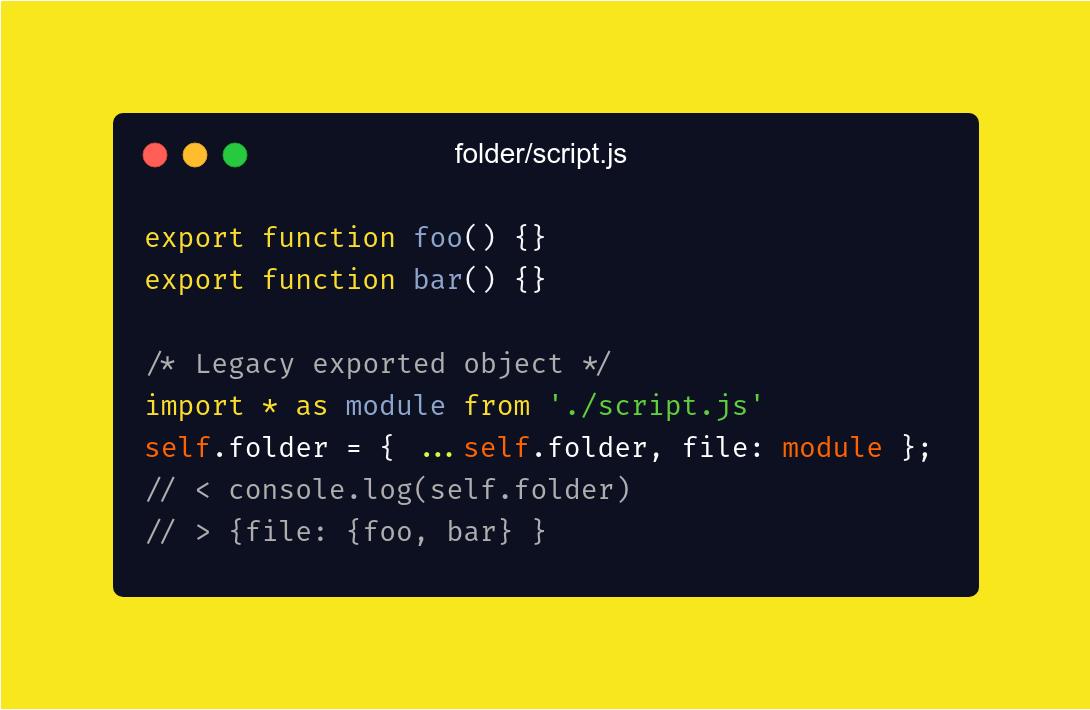
SCORE! When writing the ES6 module specification algorithms, "self import" was one of the use cases I used to make sure that circular module imports and the module object binding mechanisms played well together. Self reference is the base-case of circularity.

TIL: A module can import itself to get access to all it's exports wrapped in a neat little object (thanks to the module cache)
Use case: migrating legacy code that put their exports onto a global object to ES modules.
14
55
From the short period (1992-1995) when Smalltalk make a serious run at being the “successor to COBOL” for the IT world.
The photo on the left is the cover of a product brochure featuring almost all of Digitalk’s staff. The complete brochure is at wirfs-brock.com/allen/files/…
5
8
16