
Dreaming the future of software; Project Editor ECMAScript 2015; Reformed Smalltalker JavaScript historian dl.acm.org/doi/abs/10.114… @allenwb@mastodon.social
Sherwood Oregon USA
- Tweets 8,520
- Following 218
- Followers 6,373
- Likes 436





An update on the MS Word architectural limitations on outline format lists described in this quoted thread.
1/

Here is an example of a Word bug I discovered that derived from a hidden load bearing architectural decision:
The JavaScript standard spec makes extensive use of Word’s outline format lists to specify algorithms. The 2015 edition more than doubled the number of algorithms. 1/
1
2
3
Hey @statefarm, it’s 2022. How come your web-based payment system won’t let me enter the hyphen that is an integral part of my last name. Your other systems don’t seem to have a problem with it. Good neighbors shouldn’t make customers mangle their names.
5
Alternative heading:
Here is how JavaScript supports multiple inheritance and mix-ins:

1/ JavaScript doesn’t support multiple inheritance. This is a workaround:
const S1 = (Sup) => class extends Sup { /*···*/ };
const S2 = (Sup) => class extends Sup { /*···*/ };
class C extends S2(S1(Object)) {
// ···
}
1
2
6
What most visionaries are also missing is a Dan Ingalls, a innovative builder who can turn a vague vision into a useful reality. Not easy to find or hire. And we don't do much to develop future Dans or environments where they can flourish.

Good point.. "fund people, not projects".
What I'm thinking about is that Engelbart had a team, but it appears we have a supply of *only* Engelbarts: ppl who want to be the Engelbart of the team.
Given funding, I suppose one could hire a team.
7
26
Allen Wirfs-Brock retweeted

This paper describes a live programming experiment on top of @CroquetIO – and yes what we’re building now is “much more real” but this was a really interesting stepping stone.
Kudos to my co-authors @yoshikiohshima @AranLunzer @jenfrolics @bbupton @gocroquet

I posted our latest paper: tinlizzie.org/IADocs/live-pr… This paper is about collaborative live programming we did a few years ago. We are doing something more real this time around, and hopefully we can make it more accessible soon.
1
6
15
This tweet led me into a long and twisty thread speculating about PL design history vs. HCI.
Human usability factors are always important but once a PL has an established user base, so many other factors also constrain evolutionally design choices.

By contrast, @Felienne told me she was encouraging TC39 members to use the CogDim framework in evaluating proposed features to Javascript (if I remember the convo correctly). Now that's praxis!
1
5
Allen Wirfs-Brock retweeted
Alexander’s work started to impact (some) SW design thinking in the late 1980’s. This was proceeded by 30 years of “early" PL designs. Many aspects of those early designs established PL norms/patterns that are still wide applied.
2
3
Re impact of HCI research on major PL design.
@IanArawjo and @alcides are correct about sloppy history issues. E.G. HCI discipline largely emerged in 1980s; SIGHCI founded in ’82. Developing timelines is a good tools for exploring such influence speculations.

I tend to agree with @alcides here, honestly: there’s simply not enough historical work to show one way or the other. Assuming things is hearsay, not real historical work. History usually surprises us. Would be very interesting to write about this space.
1
1
I agree, habitats/inhabitant is a great metaphor for how people now relate to the digital world. Much better than apps/users. I been using the Habitat metaphor in my think about the future of "personal(ized) computing:
wirfs-brock.com/allen/posts/…

I want to see a second renaissance of A Pattern Language in programming.
This time not as the superficial OO implementation “patterns”...
...but about the fact that we create *places* in software that users *inhabit*, teaching which composable design patterns are proven to work
5
8
I know nothing about baseball or @CoryGearrin but his advice 🧵is applicable to any field in which someone is trying to develop mastery.
"Own your craft"
1
Of course, but you only realized it after the fact. Having lived and work through even bigger changes (my 1st serious programming on an 8k PDP-8 w/256k mass storage), all such changes are incremental building on previous gen. Each 2x improvement isn't game changing.

Are there any technologies or software development techniques that open up when your computer has 100x the *disk space*? Like 100gb disk space vs 10 terabytes. I know it makes package management and version control easier; I'm curious about what else
5
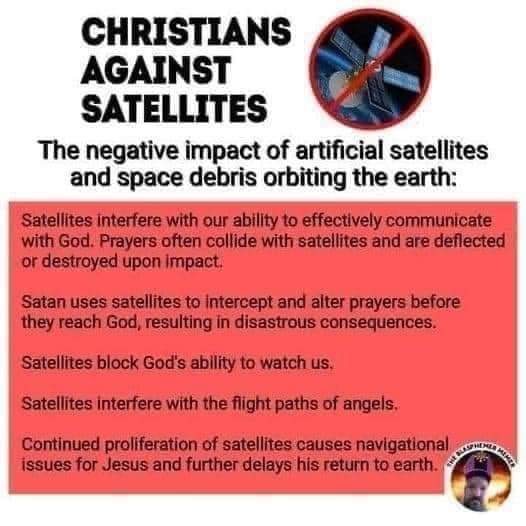
In catechism class I always had my doubts about the whole omnipotence/omnipresence thing. I guess this proves it!

1
3
5
Oh, that story is told in great detail here:
dl.acm.org/doi/abs/10.1145/3… (189 pages)

History of javascript that was never told:
JavaScript for one. It was designed in 10 days under pressure from the Netscape overlords. It tried to emulate Scheme but Netscape insisted 🧵 #javascript
#programming #BlackTechTwitter #WomenWhoCode #techtwitter
1
1
10

All ACM papers and articles published between 1951 and the end of 2000 are now free to access!
So much is foundational and still very relevent.

As we celebrate #75YearsofACM , we are proud to announce that ACM has opened the articles published during the first 50 years of our publishing program. Check out over 117,500 articles on a wide range of computing topics via @ACMDL: bit.ly/2PDcLyq

1
25
62
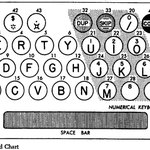
A new take on diagrammatic programming. It's fun to speculate how we might be programming today if something like this had happened in the mid-1950s instead of FORTRAN. (Inputting programs would have been a huge challenge...keypunch art??)
media.mit.edu/projects/2d-an…
1
2
9